

E-Financial
Nigeria Is Broke! Trillions in Oil Revenue Looted

Opinion by Dr. Peregrino Brimah
Diezani Alison-Madueke, Petroleum minister said in London, October that the theft of oil revenue needed for national building amounted to terror.
David Cameron, British Prime minister, said at this year’s World economic forum meeting at Davos on January 24, that Nigeria earned 100 billion dollars in oil revenue for the year 2012—which is more than all the aid given to the entire Sub-Saharan Africa—but corruption and lack of transparency of the civilian administration denied growth and causes suffering to continue in the nation, with a huge amount of Nigeria’s earned revenue being looted ever before it reaches the nation.
One such “hole” or “massive gap” Cameron referenced that had been uncovered, accounted for the looting over 800 million dollars from oil revenue paid to Nigeria.
The British Prime Minister called for global attention to the epic looting and economic terrorism that is completely destroying Nigeria.
Presidential spokesman Reno Omokri denied these revelations and accusations of the British Premiere, but this link proves: https://www.gov.uk/government/speeches/prime-minister-david-camerons-speech-to-the-world-economic-forum-in-davos.
Premium Times on November 12, published startling findings of a 7 billion dollar hole in Nigeria’s oil revenue retrieval, with the NNPC implicated along with Swiss oil dealers. In the report from the Berne Declaration, a Switzerland based anti-corruption NGO (http://www.evb.ch/en/p25021690.html); it was shockingly exposed that Nigeria’s oil was being sold below market price in an elaborate inter-continental scam involving the petroleum ministry and foreign cartels, operating in financial lax Switzerland.
The harrowing report from the Berne Declaration which includes a distressing 20 page BD Research detailed publication “Swiss traders opaque deals in Nigeria” (http://issuu.com/erklaerungvbern/docs/bd-nigeria-en-20131101?e=3524425/5474605#search), exposed in detail, numerous looting operations of the Nigeria oil marketing sector. Some issues highlighted: Nigeria is the only major producing company that sells 100% of its oil via private intermediaries, thus the nation loses in extra revenue swallowed by the oil baron cabal.
These middle men, “brief-case holders” act as “letter boxes” for PEP’s (politically exposed persons) –the well-known and hidden Nigerian cabal. 2.
The irresponsible secret calls for tender, a common practice in Nigeria; this of course is a setup between parties to get kickbacks in billions, and sell the nation’s oil at treasonous prices. Most of Nigeria’s oil is marketed through the Switzerland channel.
Well known is the multibillion fuel subsidy scam which the ministry of petroleum allowed to fester for years, effectively robbing Nigeria of more than N2 trillion. No one has yet been held accountable for any of these elephantine pilferages.
Ngozi Okonjo-Iweala, minister of the economy, has stubbornly denied that the nation is broke. This is far from the truth and reality on the ground. Multiple sources within all arms of the Federal government acknowledge that Nigeria is broke and unable to take care of it financial obligations to the people.
The budget for the fiscal year, 2012 was 5 trillion naira, this is about 30billion dollars.
The total revenue earned from oil sales in the same year, according to British Prime Minister David Cameron was 100 billion naira.
There is a gross discrepancy in the budget – not inclusive of actual funds disbursed—from the total earnings in oil revenue.
This gap can only be accounted for if Nigeria paid in amortization on its foreign debts to the tune of 70 billion dollars.
However in this same period, Nigeria has accumulated greater foreign debts and its 2012 repayment figure was $246,663,000 according to Index mundi.
The total foreign debt stands at $6.7 billion. Clearly, foreign debts are not where our massive revenue from oil is going. The government in this period, rather also embarked on schemes to tax the masses via removal of oil subsidies and other schemes to supplement capital for government expenditure.
More of such are put out almost every day. But despite increased taxation and levying, there is no money in the economy, as looting has completely drained the nation’s coffer of all wealth.
Nigeria’s domestic debts have also been catapulting as the nation awards contracts but cannot afford to pay the contractors. This domestic debt currently stands at over N6.1 trillion.
If not the ASUU strike, then the recent riots over none payment of stipend by Niger Delta Amnesty militants in Russia, highlights the disturbing reality of the broken state of the economy; even pet and prized projects and national security concerns of the administration in which they have the most vested and regional interests can no longer be sustained and funded.
Following the money—in this same period of rising domestic and foreign debt, Nigeria is making more and more “businessmen” and oil oligarchs, billionaires in dollars.
Compounding the acute lack of capital in the nation, implicated on looting of oil revenue by collaborations involving the ministry of petroleum with its family of international business stooges and a cartel of oil barons, is an artificial, politically motivated capital constriction.
As is a common dirty practice in Nigerian politics, the ruling administration purposefully starves the nation of circulating capital to bring the nation to its knees ahead of elections, with aim to manage the release of this capital through the subservient, to influence votes.
This artificial, criminal crisis instigated two years to the next presidential election has created a potentially unrecoverable economic catastrophe.
At the head of Africa’s largest nation’s financial meltdown is the oil minister, one of the president’s , or rather, “Charlie’s angels;” a billionaire or trillionaire, who “owns” Nigeria’s corporate media and senate and remains relatively insulated from proportional castigation and arrest for gross looting of the nation’s oil revenue.
A typical case that merits little media attention involves the minister of oil, Diezani Alison-Madueke and two of her alleged “stooges,” one Jide Omokore and another Kola Aluko.
A case of iniquitous misappropriation of over N58.9 trillion naira from the illegal transfer of four oil blocks in favour of Jide Omokore`s ATLANTIC ENERGY DRILLING CONCEPT. This whopping sum the minister and her coterie are accused of plundering, equals the nation’s total earned oil revenue for four years at the rate of $100bn or 16 trillion/year.
The case is being handled by the Senator Emmanuel Paulker-led Committee on Petroleum Upstream. (National Enquirer) These “Diezani boys” who have recently been featuring in the news, command so much wealth, they are reported to be flying around the world in private jets and buying up hundreds of millions of dollars worth of property and boats. Illustrating the authority and audacity of Jide Omokore, he was arrested in France with Nigeria’s presidential jet in November of 2012 (http://saharareporters.com/news-page/french-police-detain-nigerian-private-jet-carrying-president-jonathans-front-man).
What the gross, blatant robbery and misappropriation of Nigeria’s wealth, being stolen before and after it reaches the nation; accounts to is frank terrorism.
The nation is on its knees, crippled and begging for international assistance from the ongoing siege. The masses who pay tax and pay fuel subsidies, only for the income to be looted in whole, are what can be termed as “mugus,” “fools,” as also is the nation’s military currently dying, engaged in what the police should have controlled (waging a war against Boko Haram terrorists in the nation’s north eastern borders) while in a role-reversal, the police are occupied in fascist intimidation campaigns, as criminal tools of the presidency.
While the drained military die to clean up the mess of politician and police fatuitous obliquity, the culprits and masterminds behind Boko Haram remain free with impunity, guzzling the nation’s wealth in high offices.
“Tax and Transparency after the G8: Nigeria and Beyond” revealed in London this October that “Nigeria is the only country in the world where illicit financial flows, which it estimated at about 10 percent of GDP, are larger than tax revenues levied outside the natural resources industries.”
This means, officially more than what Nigerians suffer to pay in taxes is being looted. Oil pollution in the Niger Delta has already reached levels of irreversible poisoning of the ecological environments.
And nothing has been done to check this, as reckless looting of the oil resource is at its highest ever with consequential loss of revenue and dangerous cancer causing morbid pollution.
Another form of massive and reckless looting of the recent civilian regimes is in the privatization craze.
What one of Nigeria’s cabal who recently part-purchased PHCN (Power assets) coined the term “Africapitalism” to promote.
The reality is that these private sector cabal, do not provide alternative and cost effective service to supplement the government failures, but rather they accentuate the failure, then buy the nation’s assets at a tenth of their value to then turn around and offer the service or utility at double or triple the global charges for these.
A benefactor of government unregulated oligopolistic service provision, recently referred to the wealth profiteered from the masses as “ritual-like.”
This Africapitalism is a grand scheme of extortion of the 160 million masses and sheer robbery. Unless something is done and done fast, Nigeria will never recover from the epidemic looting of its 6th republic.
Some in some quarters clamor for a fractionation of the nation—the size of which may actually be a factor in the impossibility to abate the gargantuan looting—however the next most urgent step for the nation is a Rawlings-style, “bloody” cleaning out and recovery of looted national assets and wealth, or else Nigeria or the fragments of it will never recover from the colossal looting that has been the bane of its 6th republic.
They say that one day the masses will have nothing left to eat but the rich. The day has indeed come.
Dr. Peregrino Brimah
http://ENDS.ng [Every Nigerian Do Something]
Email: [email protected] Twitter: @EveryNigerian


Central Bank of Nigeria (CBN) has introduced stricter Bank Verification Number (BVN) enrolment and data access rules to prevent suspected fraudulent transactions, effective May 1, 2026.

This was disclosed in a statement issued over the weekend and titled “Addendum to the Revised Regulatory Framework for Bank Verification Number (BVN) Operations and Watchlist for the Nigerian Banking Industry 2021.”
The statement was signed by Musa Jimoh, director of the Payment System Policy Department.
The CBN said it introduced the ‘Revised Regulatory Framework for Bank Verification (BVN) and Watchlist for the Nigerian Banking Industry 2021’, to promote a stable financial system.
The apex bank reiterated that enrollment for the BVN be limited to individuals aged 18 and above, while amendments to phone numbers linked to a BVN will be restricted to a one-time change only.
Financial Institutions are mandated to establish and maintain a temporary watchlist for BVNs implicated in suspected fraudulent transactions reported by a financial institution.
“A BVN may remain on this temporary Watchlist for a maximum period of twenty-four (24) hours. During this period, the BVN owner shall be contacted to clarify the identified transaction(s).
Enrolment for BVN is restricted to individuals who have attained the age of eighteen (18) years and above. Amendments to phone numbers linked to a BVN shall be allowed only once,” the statement read.
The CBN insisted that it maintain an exclusive right to access BVN databases and to approve access to them by financial institutions.
“Access to the BVN databases shall be exclusively granted to Central Bank of Nigeria (CBN) licensed financial institutions. Notwithstanding this provision, the Central Bank of Nigeria (the Bank) reserves the right to approve access to the BVN databases in extenuating circumstances and in accordance with the provisions of extant laws,” the statement said.
The directive was part of the CBN’s recent regulatory amendments in combating fraudulent activities.
On Tuesday, the bank issued new regulations, “Baseline Standards for Automated Anti-Money Laundering (AML) Solution for Financial Institutions in Nigeria’, to all financial institutions, in a bid to automatically counter money laundering and terrorism financing.

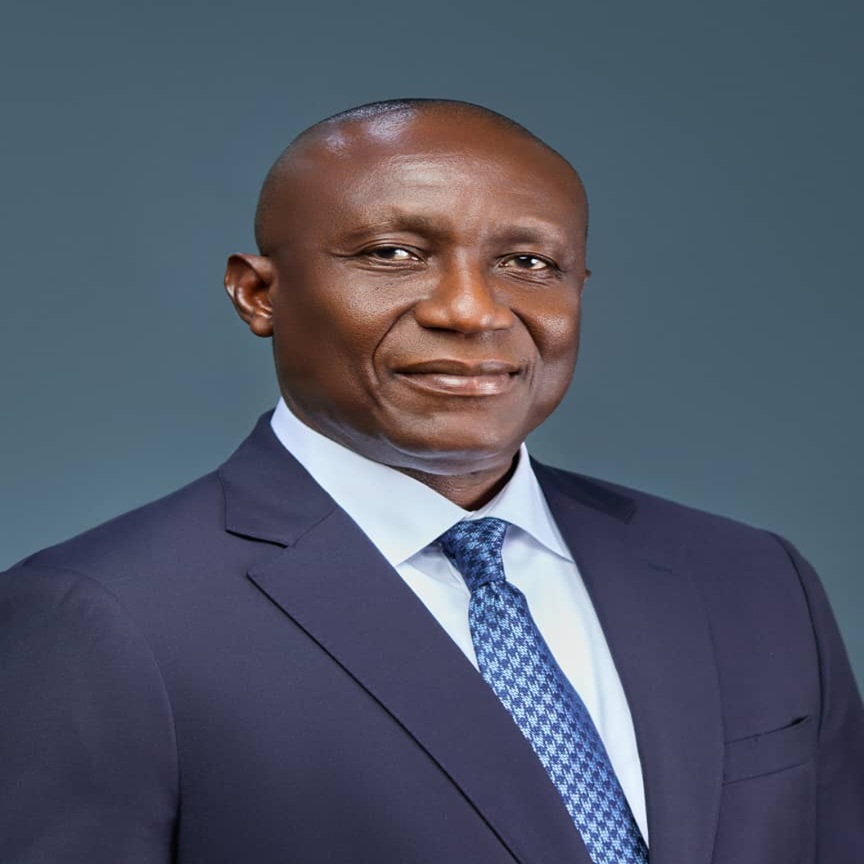
NOVA Bank Limited has announced the appointment of Jude Anele as its Managing Director and Chief Executive Officer, following the approval of the Central Bank of Nigeria.

Jude Anele
The appointment comes at a pivotal moment in the Bank’s evolution, following its transition from merchant banking to commercial banking and the successful completion of its recapitalisation programme ahead of the March 31, 2026, regulatory deadline.
Anele brings more than 33 years of banking experience across West and Central Africa, with deep expertise in retail / commercial banking, corporate banking, risk management, institutional transformation and executive leadership.
Over the course of his career, he has led complex banking operations, strengthened governance frameworks, delivered sustainable revenue growth and built high-performance teams.
The appointment reflects the Board’s strategic commitment to consolidating NOVA Bank’s commercial banking platform while accelerating growth across its Corporate, Commercial and Retail segments, as well as priority markets.
Speaking on his appointment, Anele said he was honoured to assume leadership of the Bank at a defining stage of its growth.
“Nova Bank has built a strong institutional foundation defined by regulatory compliance, capital strength, disciplined governance and a clear commercial mandate.
“Our focus now is execution — deepening customer relationships, expanding responsibly across priority markets, strengthening risk discipline and delivering sustainable value to our shareholders,” he said.
The Bank’s Chairman, Phillips Oduoza, also expressed confidence in the new leadership.
“The Board is pleased to welcome Mr. Jude Anele as Managing Director and Chief Executive Officer. His depth of experience, strategic clarity and proven leadership record align strongly with NOVA Bank’s growth ambitions,” Oduoza said.
He added that with recapitalization completed ahead of the regulatory timeline, the Bank is entering a new phase defined by scale, stability and structured expansion.
NOVA Bank also confirmed that it has met the recapitalization requirements set by the Central Bank of Nigeria ahead of the regulatory deadline, reinforcing its capital adequacy and long-term financial stability.
The capital raise, supported by new and existing shareholders, further strengthens the Bank’s balance sheet and positions it for disciplined growth.
In 2025, Global Credit Rating reaffirmed NOVA Commercial Bank’s national scale long- and short-term issuer ratings of BBB(NG) and A3(NG) respectively, while Agusto & Co. reaffirmed the Bank’s “Bbb” rating with a stable outlook, reflecting its strong capital base, sound liquidity position and resilient asset quality relative to its risk profile.
NOVA Bank currently maintains operations in Lagos, Abuja, Owerri and Port Harcourt, with plans to open eight additional branches across key commercial hubs in 2026 as part of its expansion strategy.
The commissioning of the Bank’s regional office in Owerri marked a significant milestone in its South-East and South-South growth strategy.
The event attracted government officials’ business leaders and Nigerians in diaspora and underscored NOVA Bank’s commitment to supporting enterprise development and economic growth.
NOVA Bank Limited is a commercial bank licensed and regulated by the Central Bank of Nigeria. Commencing operations in 2018 as a merchant bank, the institution transitioned to a commercial bank in 2024 and provides retail, SME, corporate and commercial banking services through its Phygital model—an integrated approach combining physical branch presence with digital banking infrastructure.
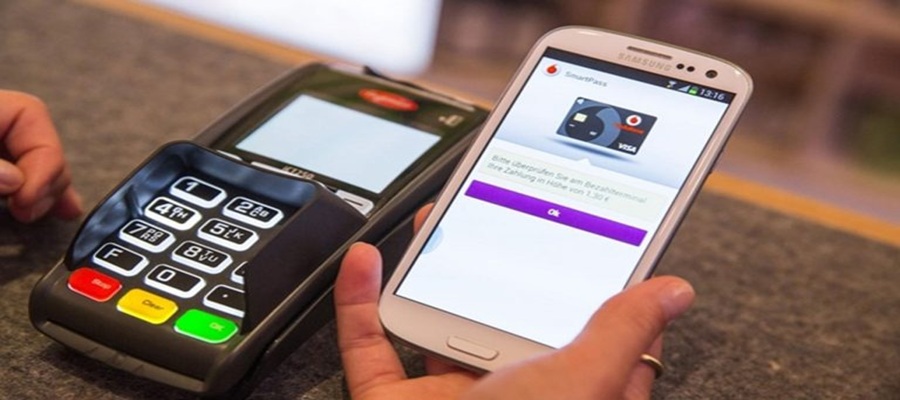
Central Bank of Nigeria (CBN) has launched simple new rules to make mobile money transfers and online banking safer and give ordinary Nigerians more say over their cash.

CBN
The changes aim to stop fraud in our fast-growing digital money world. A notice dated March 12, signed by Musa Jimoh, says the rules start on July 1 for all banks and payment apps in Nigeria.
Customers can now choose if they want instant payments turned on or off on their accounts—anytime they like. Banks must let people say yes or no with strong security checks called Multi-Factor Authentication (MFA), like passwords plus phone codes.
New customers start with it on, but can switch it off easily. If off, online transfers stop right away, but you can go to the bank branch to send money the old way.
People can also change their daily spending limits, up to ₦25 million for personal accounts or ₦250 million for businesses—but only after the bank checks risks. Changes happen fast after customer okay via MFA.
CBN wants banks to use big computer systems to watch for funny money moves, like sudden big inflows or outflows that might mean thieves.
For safety, opening or waking up online accounts needs “liveness checks.” This means you prove you’re real-time alive by blinking, smiling, talking, or turning your head on camera—matched to your Bank Verification Number (BVN) and National ID.
Mobile apps lock to one phone or device at a time. No using the same app on two gadgets together. Switching phones? Full check again.
New mobile apps or new devices get tiny limits for the first 24 hours—just ₦20,000 in or out—to test for tricks. Internet banking from a new gadget also needs extra MFA steps first time.
CBN says these are basic must-dos to protect users, catch crooks faster, and let people control their money better.
The rules come as more Nigerians use phones for quick transfers via apps like Opay, Palmpay, and bank wallets—saving time but facing scams.
CBN balances this growth with tough safety to build trust. Banks must follow or face fines, helping everyday workers, traders, and families bank without fear.

Tech Expert Unveils BAT-BOT AI App to Curb Fake News ahead of 2027 Elections

MTN Nigeria Races Ahead in Fibre Broadband Market

CBN Tightens BVN Rules to Curb Fraudulent Banking Transactions

Nova Bank Appoints Jude Anele as Managing Director/CEO

CBN Rolls Out New Rules for Safer Instant Payments, More Customer Control

Kaspersky Discovers New Phishing Campaign Exploiting Google Tasks Notifications to Steal Corporate Credentials

esentry 2025 Report Shows Healthcare, Financial Services and Telecoms as Staging Grounds for Increased Cyberattacks in Africa

AfDB, UNDP Launch $10Bn AI Initiative for Africa

Mutual Benefits Assurance Settles ₦5.9bn Claims in January 2026

Pheelz Shares His Journey on Glo-Sponsored African Voices




 General News3 days ago
Interswitch Advocates Trust-Driven Infrastructure as Cornerstones of Africa’s Cross-Border Capital Future

 News3 days ago
NLNG Advances Media Excellence with Change Your Story Workshop

 E-Financial3 days ago
CBN Orders Banks to Restrict Access to Banking Services for Loan Defaulters

 E-Business3 days ago
Why JustMarkets Is a Strong Choice for Gold Trading

 E-Financial3 days ago
UBA Business Series Celebrates ‘Gen.W: The Evolved Woman’ in Push for Female Empowerment

 Telecom3 days ago
NDPC Warns Content Creators Against Privacy Violations in Viral Videos

 Telecom2 days ago
VDT Communications Achieves Two Prestigious Certifications ISO /IEC 27001:2022, ISO/IEC 27032:2023 Reinforcing its Leadership in Broadband Service Provision

 General News3 days ago
FCCPC Launches Fuel Price Surveillance, Probes Airline Price Gouging, Resolves N10bn Complaints